
Construction Is Evolving. Compliance Has to Keep Up.
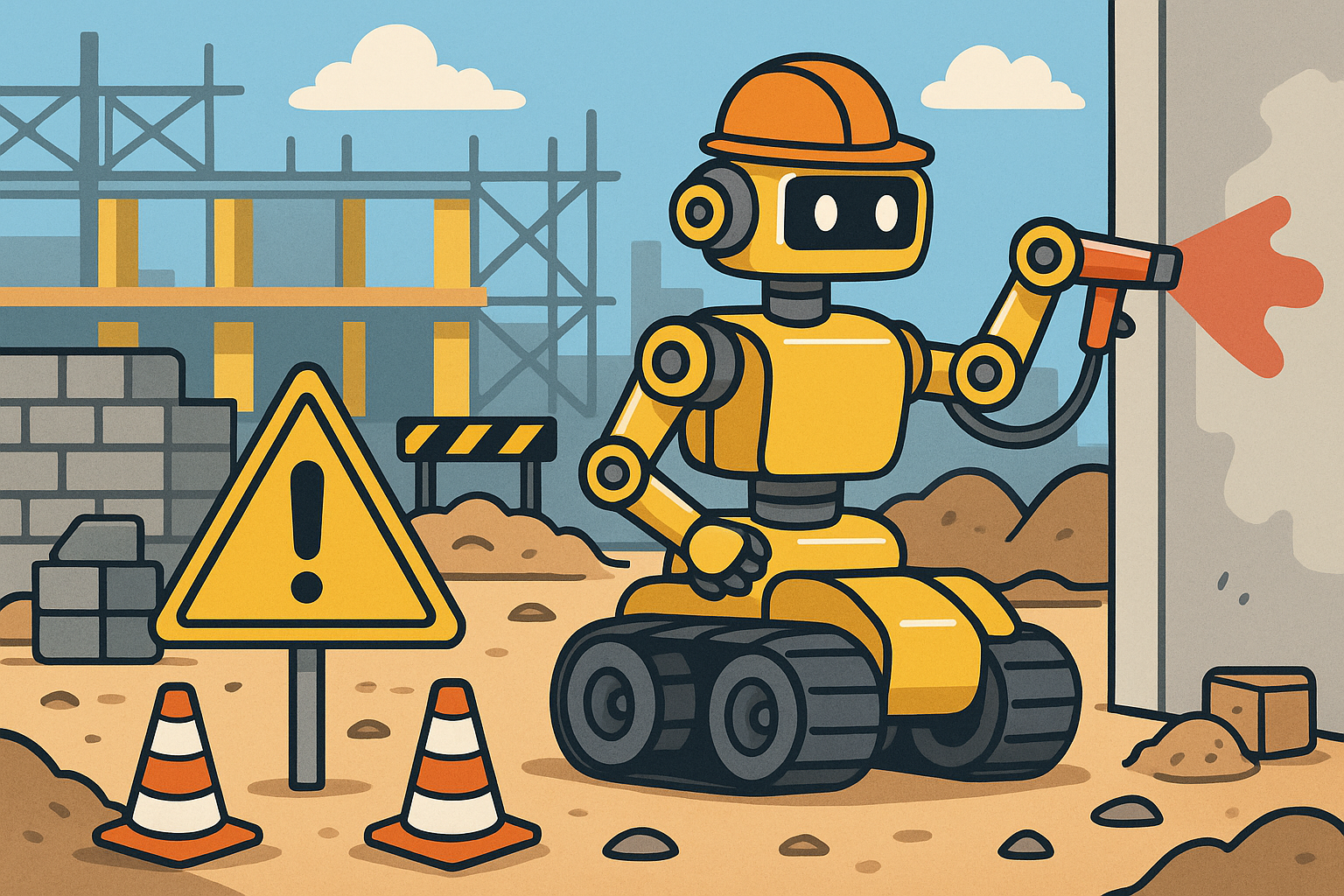
From drywall finishing to painting and sanding, robotic systems are making their way onto construction sites with increasing regularity. These mobile manipulator robots are designed to reduce labor costs, improve finish consistency, and accelerate timelines in both commercial and residential builds.
But to go from pilot to production, these systems must be more than effective—they must be safe. And that’s where compliance becomes mission-critical.
Why Compliance Isn't Optional
Unlike factory settings, construction environments are highly variable and human-dense. Autonomous or semi-autonomous machines must operate safely around people, navigate cluttered and changing layouts, and adapt to real-world messiness.
To deploy at scale, construction robots must meet requirements around:
- Human safety: Avoiding collisions, ensuring safe speeds, and reliable emergency stops
- Electrical and battery safety: Minimizing risks from high-power systems in tight, mobile enclosures
- System reliability: Preventing software or hardware failures that could result in injury or property damage
These aren’t just engineering challenges—they’re regulatory ones. Compliance ensures that safety isn’t just considered, but proven and validated.
What Compliance Looks Like in Practice
Ensuring a robot is compliant doesn’t just mean ticking a few boxes at the end. It means thinking holistically across:
- Design: Using components rated for safety and building in redundancies
- Operation: Implementing intuitive interfaces for mode switching, manual control, and fault recovery
- Environment: Considering dust, debris, and layout variability as part of the risk profile
- Maintenance: Ensuring end-users can operate and service the robot without introducing new hazards
A system built for compliance is one where safety is built in, not bolted on.
Standards That Matter for Construction Robots
Here’s a breakdown of the most relevant standards for mobile manipulator platforms in construction:
🛠️ Core Functional Safety Standards
Standard
What It Covers
Why It's Relevant
ISO 12100 / ANSI B11.0
Risk assessment for machinery
Mandatory for all robotic systems
ANSI/RIA R15.06
Robot arm safety
Applies to robotic manipulators
ANSI/RIA R15.08 (Type C)
Mobile robot + manipulator safety
A must for construction AMRs
ISO 13849-1/-2
Safety-related control systems
For validating emergency stops, motion control, etc.
IEC 61508
Functional safety of software/electronics
Used in safety controllers and embedded systems
🔌 Electrical & Mechanical Safety
Standard
What It Covers
UL 3100
Battery-powered autonomous platforms
UL 1740
Robotics and robotic equipment
IEC 61496
Electro-sensitive protection (e.g., LIDARs)
ISO 14119
Safety of interlocks (e.g., tool change)
ISO 4414 / ANSI/NFPA T2.24.1
Pneumatics systems safety
What Happens If You Skip Compliance?
Skipping compliance (or even delaying it) can create massive roadblocks:
🚫 Rejected from job sites by GC or insurance 🚫 Liability in case of accidents or malfunctions 🚫 Barriers to entering international markets 🚫 Loss of customer trust and commercial partnerships
In contrast, being compliance-ready unlocks a competitive advantage—especially in construction, where risk management is everything.
Don’t Wait Until It’s Too Late
One of the most common pitfalls in robotics development is leaving compliance until the last minute. But retrofitting safety functions—or worse, going back to redesign core systems—can derail timelines and burn through budgets.
The most successful teams treat compliance like any other core product function. They:
- Start with risk assessments
- Plan for safety during early architecture discussions
- Test and validate iteratively
- Document thoroughly
Where Saphira Comes In
At Saphira, we help construction robotics companies:
✅ Identify the right standards for each region and robot function ✅ Generate risk assessments and validation plans automatically ✅ Manage safety documentation across versions and markets ✅ Prepare for audits with UL, Intertek, CE, or OSHA/NRTL labs ✅ Reduce time-to-certification using AI-powered workflows
Our platform turns compliance from a roadblock into a runway for growth.
The Bottom Line
Construction robots are here to stay. But for them to move beyond pilot sites and into everyday use, compliance must be part of the blueprint.
It’s not just about safety. It’s about trust, scale, and speed to market.
✅ Want to launch smarter and faster? Let Saphira help you automate compliance. 🔗 Book a demo and get your construction robot audit-ready in weeks, not months.