
Opening
Modern engineering organizations use dozens of tools:
- DOORS
- Jira
- Polarion
- simulation systems
- PLM systems
- test infrastructure
- telemetry platforms
- architecture tooling
Each tool manages individual artifacts. Nobody manages the relationships.
Core Thesis
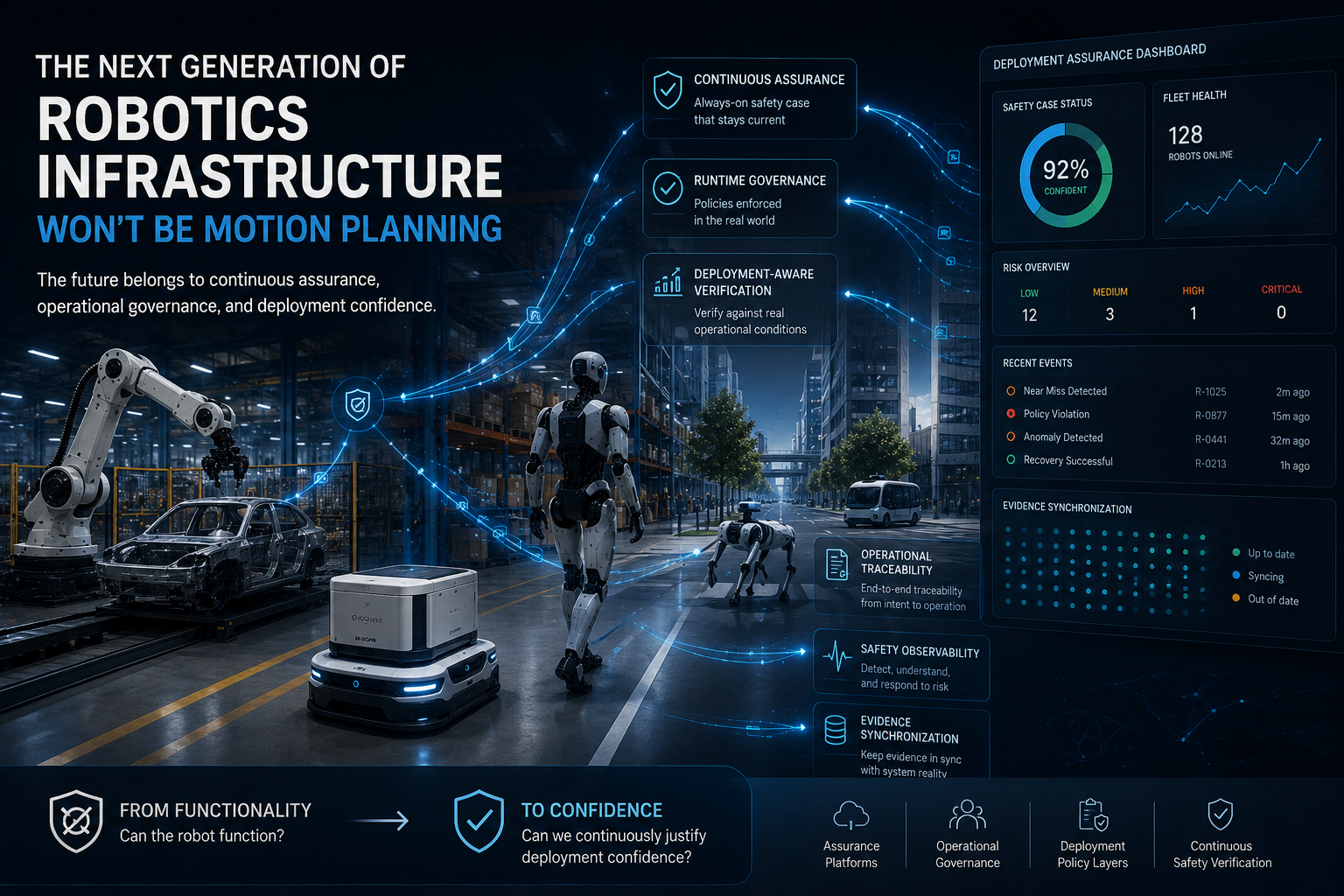
The future of safety-critical engineering is the assurance graph.
What Is the Assurance Graph?
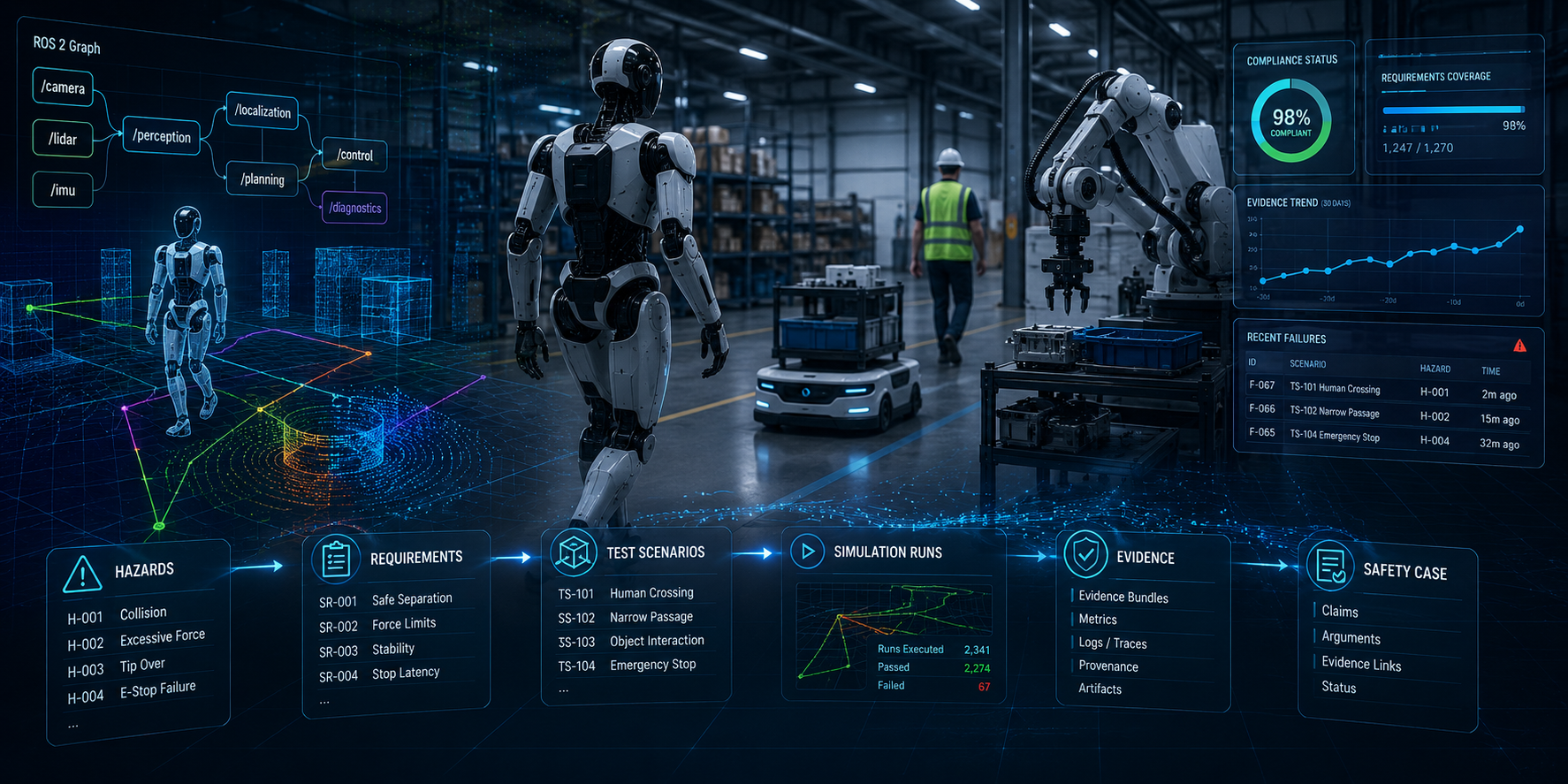
A continuously synchronized graph connecting:
- hazards
- requirements
- architecture
- controls
- code
- tests
- incidents
- telemetry
- operational assumptions
- safety arguments
Why Existing Systems Fail
Requirements systems manage requirements. Test systems manage tests. Ticketing systems manage changes.
But no system continuously reasons across:
- dependency relationships
- assumption propagation
- evidence invalidation
- operational impact
Why This Matters
Most critical failures under change are graph failures.
Examples:
- software timing changes invalidate braking assumptions
- perception stack updates invalidate scenario coverage
- supplier firmware changes invalidate safety arguments
The Shift
The safety case becomes:
- generated state
- a projection of the graph
- continuously synchronized
Not a manually assembled PDF.
Closing
The next decade of safety engineering will belong to systems that understand relationships, not just artifacts.